The Finance Lab

Students Building Wealth, Not Just Taking Notes

 
IMG_4851.jpg

What Makes Us Different

Every year, over one million students receive scholarships to pay for college.

But here's what most scholarship programs miss: the opportunity to teach students about the money itself as it changes hands.

Most scholarships fund education.

We fund education AND teach financial independence.

What We Do

The Finance Lab gives students scholarship dollars AND teaches them to invest a portion of it. Students open real brokerage accounts, build portfolios, and learn to manage money while they're still in school—not a decade later when they're making life-changing financial decisions like buying a house, changing jobs, or starting a family.

Students in The Finance Lab don't just answer questions about compound interest—they watch their own investments grow in real time.

They don't just learn what an index fund is—they buy one.

They don't just read about risk tolerance—they experience it as the market changes.

IMG_5405.jpg

The Program:

  • High school seniors receive a $1,000 scholarship

  • Students invest at least 10% in a real brokerage account

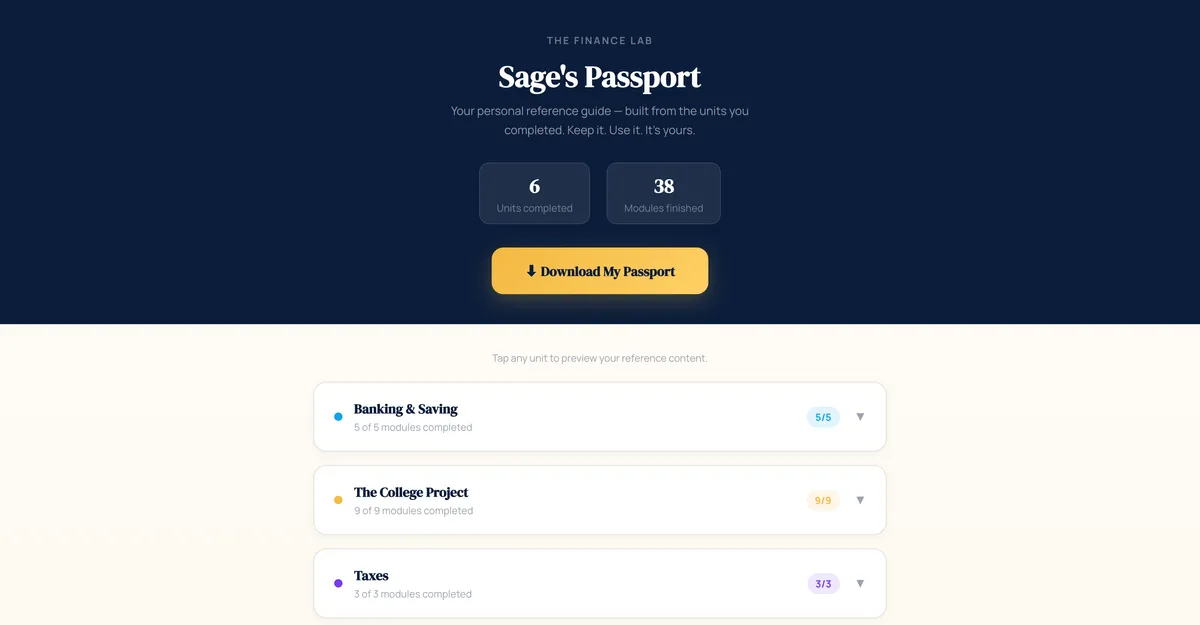
  • Self-paced video modules teach goal-setting, risk tolerance, and portfolio management

  • Students present their investment strategy to an authentic audience

  • Continued mentorship through first two years of college

From opening their first investment account to navigating market volatility, students learn through hands-on experience—not textbooks.

Mission

To provide students from underprivileged communities with a personalized, principled, and experiential financial education.

Vision

To prepare youth to pursue their financial goals and navigate life's money challenges.


Research-based

Education

Our public education system throughout the majority of the U.S. provides no equitable opportunities for students to gain personal finance knowledge and/or skills. We teach everything from health and physical education to language arts and math, but we leave our students to fend for themselves when it comes to everything from filing taxes and managing a budget responsibly to understanding debt and affording post-secondary education.

“Only about 1 in 20 students from low-income backgrounds (outside of the five states with mandated personal finance education standards) attend high schools with a personal finance requirement.” - Next Gen Personal Finance

“There is a sizeable difference in financial literacy between those with $50,000 or more in household income compared with those whose household income is less than $50,000.” - The Global Financial Literacy Excellence Center


Inequity

This gap in education contributes to socio-economic, health, and occupational injustices related to poverty. It’s a social justice issue.

“Stress about money and finances appears to have a significant impact on many Americans' lives. Some are putting their health-care needs on hold because of financial concerns. Nearly 1 in 5 Americans say that they have either considered skipping (9 percent) or skipped (12 percent) going to a doctor when they needed health care because of financial concerns. Stress about money also affects relationships: Almost a third of adults with partners (31 percent) report that money is a major source of conflict in their relationships... Also troubling are the disparities in stress exposure: women, parents, younger people and those living in lower-income households all report higher levels of stress than others.” - American Psychological Association


Position

It’s unacceptable for us to continue to neglect the financial needs of under-served and historically marginalized communities, leaving them continually susceptible to predatory lending and banking practices.

Tailored Strategy

edited.jpg

Access

Studies have shown that students with between $1-$499 in a college savings account are four times more likely to attend college and three times more likely to graduate. Our fellows become named beneficiaries of 529 accounts during their 10th grade year. Access to a college education means access to a greater variety of higher wage employment opportunities.

Our 529 Scholarships
IMG_3077%2B%25281%2529.jpg

Experience

In a field as complex as personal finance, students must have the opportunity to learn by doing. In The Finance Lab, our students are immersed in a curriculum of consistent reflection, discourse, goal setting, and financial analyses. Students learn to navigate through the financial community as they receive personalized advising in opening and managing checking and savings accounts, 529 accounts, brokerage accounts, (Roth) IRAs, credit cards (if desired), and filing tax returns.

Our Summer Institutes
IMG_0154.jpg

Community

Our fellows develop their financial acumen within a diverse financial community, both inside and outside of the classroom. Fellows develop personal plans with financial services professionals, visit with guest speakers, and engage with peer, parental, and community advocates. Our community focuses on engaging every student in honest dialogue about personal finance.

Our Partners